
Easter doesn’t have to look a certain way to be special.
Every family is different and that means every Easter can be too.
You can create your own traditions, your own moments and your own kind of magic. Whether it’s treasure hunts, time outdoors, crafts, laughter or quiet moments together… it all counts.
This is your Easter.
Your family, your way.


Practical tips for parents and caregivers:
1) Plan the day in advance
Have a clear routine so there are no surprises.
A simple plan like treasure hunt → activity → outing → quiet time helps people with PWS feel secure and helps reduce the focus on food.
2) Use an “exchange system”
If chocolate comes into the home, swap it for something your child enjoys, e.g stickers, small toys, activity voucher.
Keep it consistent so your child knows exactly what to expect.
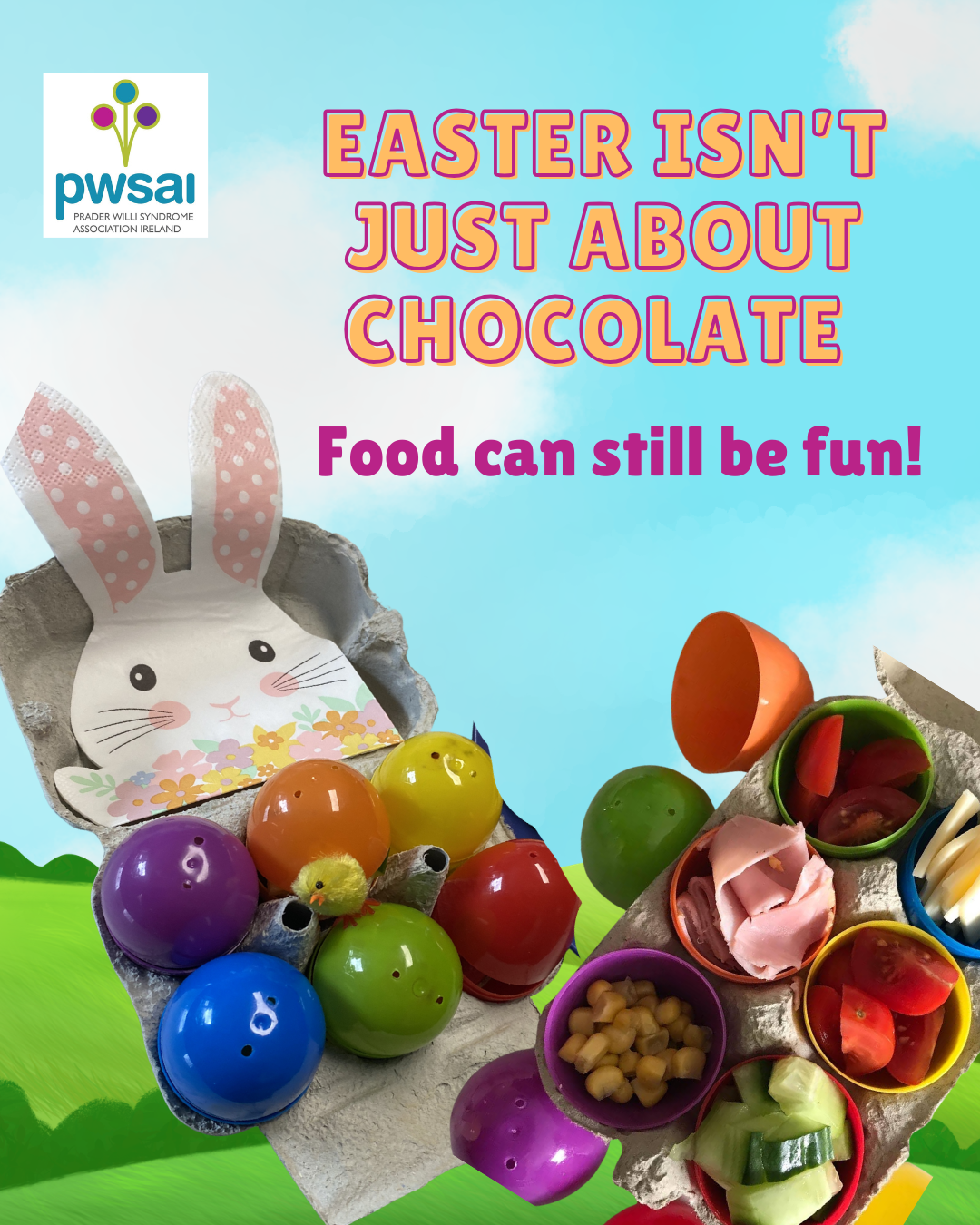
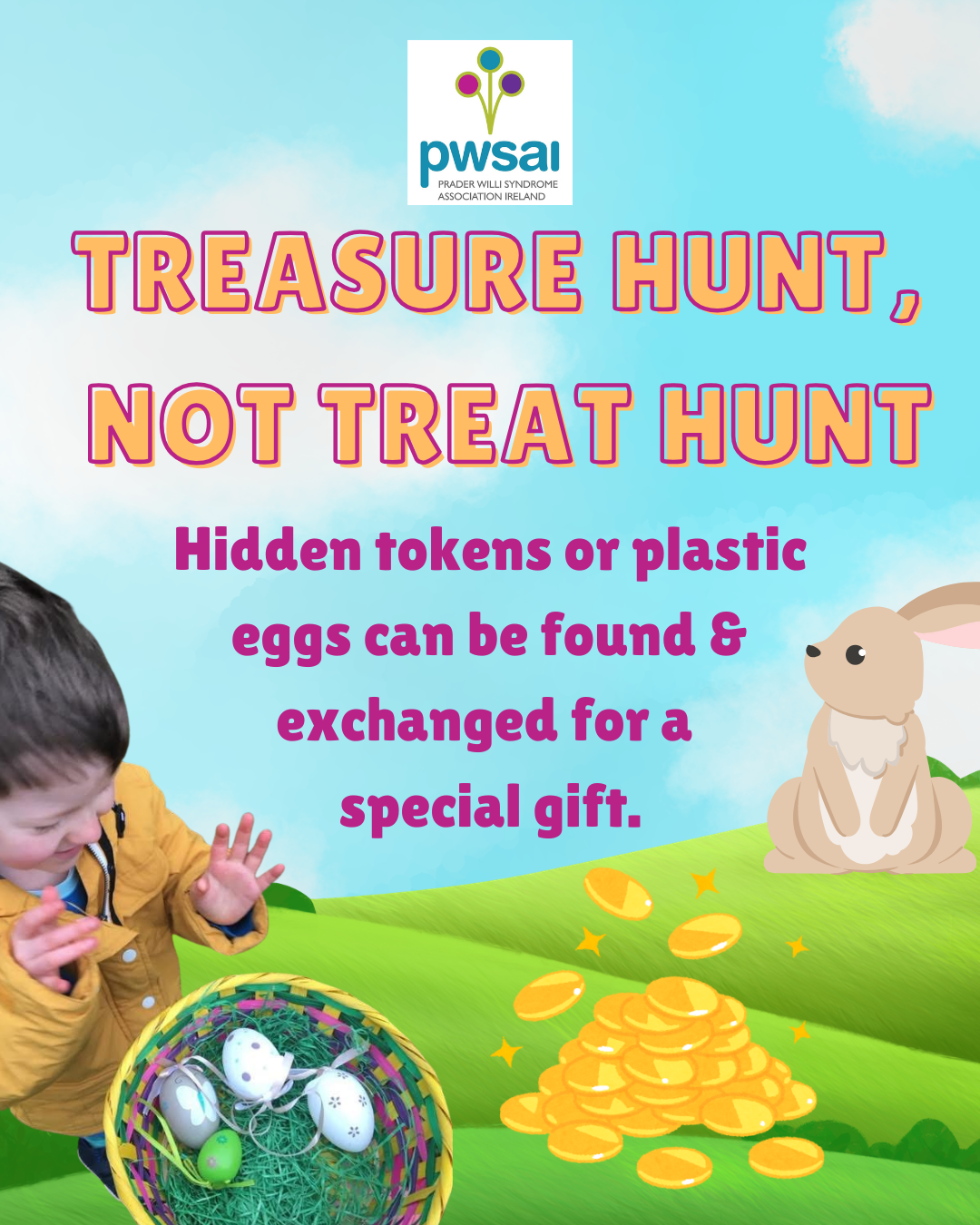
3) Fill eggs with non-food items
Think beyond food treats—stickers, mini toys, puzzle pieces, coins or tokens for fun activities.
The excitement of the hunt stays the same, just without the food focus.
4) Set expectations with others
Let family, friends and school know your plan ahead of time.
A simple message like “We’re doing a non-food Easter this year” can prevent awkward moments and keep things consistent for your child.
5) Focus on activities, not food
Make the day about what you do together, games, crafts, outdoor fun movie time.
Make memories!
The Easter Bunny knows all about special tummies, specific diets and making things fun!
 Prader Willi Syndrome Association Ireland